Thursday, 18 August 2016

Porsche drivers fume: Where’s our VW diesel payout?

Volkswagen settled its diesel deception

Porsche Logo

Volkswagen settled its diesel deception involving almost 500,000 U.S. automobiles, paying dearly to satisfy car owners affected by the emissions scandal.

What it hasn’t done is make whole its very best customers — those who own its pricier brands, which nevertheless run on smog-spewing engines.

Anand Jobalia, a hotel and home developer in Daytona Beach, Fla., is still paying $1,300 a month on his 2014 Porsche Cayenne. The SUV originally cost $81,531. Now he can’t find a buyer willing to offer more than $42,000, including the Porsche dealership where he bought it.

“I’d have a very hard time buying another Porsche at this point,” Jobalia said. “When you spend this kind of money, the least you can expect is some communication when something like this happens.”

Volkswagen has agreed to fork over about $10 billion in a settlement with U.S. regulators to buy back most of its dirty diesel models at generous rates. But that deal applies only to the company’s 2.0-liter diesel engine, a staple of Volkswagen’s eponymous product line, Jettas, Passats, and Beetles. The company has yet to address the emission cheating in its larger, 3.0-liter diesel engines, which were bolted into Porsches and Audis that cost two and three times more than an entry-level Volkswagen.

In addition to Porsche’s Cayenne, the larger diesel engine went into recent Audi sedans –A6, A7, A8; Audi SUVs — Q5, Q7; and the Volkswagen Touareg. It was particularly popular among Porsche fans. At one time, diesel Cayennes accounted for 15 percent of U.S. Porsche sales.

All told, roughly 85,000 vehicles are waiting for resolution on the larger engine. Joe Rice, a South Carolina attorney appointed to represent the class of plaintiffs, contends that Volkswagen is being more nonchalant this time around.

“These owners are very frustrated, and they feel like they’ve been abandoned,” Rice said. “Granted, Volkswagen has had a lot on their plate … but it’s self-inflicted, and they just need to gear up and deal with it.”

James Kohm, director of enforcement at the U.S. Federal Trade Commission, said an appropriate resolution would be a settlement similar to the one hammered out for the smaller engines. Volkswagen, however, hasn’t started negotiating over its Porsches and Audis.

“Right now, we’re in litigation mode,” Kohm said. “And we think we have an extremely strong case.”

Although far fewer customers are still awaiting a payout, they paid far more for their cars. The sticker price on a 2015 diesel Jetta started around $21,640, while a diesel Cayenne went for almost triple that amount. Audi’s Q7 commanded at least $53,400 in the 2015 model year. “It’s a big case,” Kohm said. “You’re still talking about billions of dollars.”

‘Working cooperatively’ 

Porsche said in an e-mailed statement that it “continues working cooperatively with all regulatory authorities.” Audi sent a similar statement.

The longer the scandal goes on, the more likely it is to tarnish the company’s blue-chip brands. After all, there’s no scarcity of choice for someone looking to spend more than $50,000 on a vehicle. Porsche, in particular, is Volkswagen’s treasure. It’s still seen as the architect of both the best-performing cars and the best-built cars. In J.D. Power rankings, the brand tops the list on performance and design and is second only to Lexus on dependability.

Car aficionados tend to get a bit breathless when they talk about Porsche. And they aren’t wrong. Close the door on a contemporary Porsche, and you’ll know what they’re talking about. It’s a six-figure “thwump” that sounds as if it were designed by NASA.

Porsche is also one of the world’s most profitable car companies. Part of that is a result of the price premium commanded by its brand. But it also comes from the clever engineering of a massive conglomerate: Porsche engineers can occasionally tuck Volkswagen parts under all its lustrous metal. A chassis here, a turbo there, or, in the case of the Cayenne, a devious diesel engine.

Reputational protection

Porsche wisely never put the pilloried engine in any of its sports cars, which no doubt will help it maintain some momentum through the diesel fallout. The Cayenne, to purists, is a kind of a compromise — a junior-varsity Porsche, or perhaps a Porsche Light. The line workers in the brand’s Slovakia plant could bolt old Pontiac Aztek engines into the Cayenne, and thousands of the Stuttgart faithful would still clamor for a 911.

Indeed, Porsche-pining doesn’t seem to have slowed much. In the 11 months since the VW diesel scandal broke, Porsche sold 5.2 percent more cars than in the year-earlier period, even without diesel SUVs. And for Audi, sales barely dipped over the same period.

Nevertheless, our Florida home developer won’t be buying another Porsche. Jobalia has been hankering for another sports car, something similar to the 911 he owned. But if he decides to treat himself, he says, the first test drive will be in a Maserati.


from Auto Detailing Services (480)233-1529 http://cardetailingphoenix.com/index.php/2016/08/18/porsche-drivers-fume-wheres-our-vw-diesel-payout/

source http://cardetailingphx.tumblr.com/post/149149388691

Why Kids Need Car Seats

Car seats save lives, just as seat belts do. However, many parents tend to be frustrated by child seats, because they can be difficult to use. As if to bear that out, SafeKids worldwide estimates that three quarters of child safety seats are improperly installed. That generally means they're installed too loosely, which allows the seat – and the child in it – to fly forward in a crash. It ...

Read more of this story at U.S. News Best Cars


source http://usnews.rankingsandreviews.com/cars-trucks/best-cars-blog/2016/08/Why_Kids_Need_Car_Seats/

Wednesday, 17 August 2016

Like glittery metallic paints on cars? There’s something you should know…

The mica used to give metallic paints their sparkle was mined by Indian children

2014-porsche-911-turbo-in-lime-gold-metallic-paint_100455965_l

You’re a conscientious consumer. You buy eggs from cage-free chickens, your bling is blood diamond-free, and your iPhone…well, you try not to think too much about your iPhone.

But what about your car–specifically, its glittery metallic paint? Have you mulled that over much?

Apparently, you should’ve. Car companies like Audi, BMW, and Volkswagen are investigating reports that the mica used to give metallic paints their sparkle was mined by Indian children as young as ten.

As appalling as that is, the news shouldn’t have come as a surprise to automakers. Cosmetics companies use huge volumes of mica to shine up lipstick, eyeshadow, and blush, and the child labor issue was brought to their attention two years ago. Shouldn’t car manufacturers have seen the potential link?

Perhaps, but maybe they took the Indian government at its word when it promised to eliminate the practice of putting children in mica mines. Unfortunately, enforcement of the Indian government’s new regulations has been spotty at best, and today, it’s estimated that 20,000 child miners can still be found in the states of Bihar and Jharkhand, abutting India’s eastern border with Bangladesh.

Much of the mica those children unearth still makes its way to exporters, who sell it to giant firms like China’s Fujian Kuncai, who then sell the mica to major players in the auto paint industry like Axalta and PPG. At least two automakers–BMW and Volkswagen–have confirmed that their paint suppliers have relationships with Fujian Kuncai and that they’re investigating whether the paints they’ve used include materials derived from child labor.

Complications

As with most things in the real world, solving the problem of children mining for mica isn’t cut-and-dry.

For example, child labor is a common practice in these areas of India. Should it be? Of course not. But it is, and changing ingrained social behaviors is difficult (see also: racism, sexism, and homophobia worldwide).

Also, the families of underage miners depend on the children’s extra income to live. Sure, government regulators can force mines to stop hiring kids, but how are the kids’ families going to compensate for the loss of household income in the short term?

Lastly, mica is used in a whole host of products, including many plastics you can probably find lying around your house. The cosmetics industry and the auto industry are taking the heat right now, but in fact, many, many other manufacturers must get involved before the demand for child-mined mica drops off.

RICHARD READ


from Auto Detailing Services (480)233-1529 http://cardetailingphoenix.com/index.php/2016/08/17/like-glittery-metallic-paints-on-cars-theres-something-you-should-know/

source http://cardetailingphx.tumblr.com/post/149104829531

87% of vehicles could be electric today with no problem – Says MIT

Today, electrics account for less than one percent of cars in America

2017-bmw-i3_

August 17, 2016

Skeptics sometimes doubt whether electric vehicles will catch on. They compare them to gas-powered cars, trucks, and SUVs, bemoaning the fact that EVs have shorter driving ranges and higher sticker prices. However, a new study shows that the biggest obstacle standing between EVs and mainstream consumers may really be a lack of information.

The study was carried out by a team of researchers from the Massachusetts Institute of Technology. It reveals that 87 percent of vehicles registered in the U.S. could be magically converted to electricity overnight, and the country would be just fine.

ALSO SEE: Ford promises autonomous cars for ride-sharing by 2021

In numerical terms, that means that more than 226 million of the country’s 260 million registered vehicles could go electric now, and we’d have the capability to pay for them, keep them charged, and get where we need to go.

To reach that conclusion, the team led by MIT’s Jessika Trancik spent four years poring over a variety of statistics, including the distances that people drive in a given day. They looked at detailed, GPS-based data from drivers in California, Georgia, and Texas and conducted nationwide surveys about transportation habits.

In doing so, not only did they discover that EVs would meet the needs of most motorists, but also that going electric wouldn’t cost car owners any more money than if they were to keep driving their current gas-powered vehicles:

“[T]he team found that the vast majority of cars on the road consume no more energy in a day than the battery energy capacity in affordable EVs available today. These numbers represent a scenario in which people would do most of their recharging overnight at home, or during the day at work, so for such trips the lack of infrastructure was not really a concern. Vehicles such as the Ford Focus Electric or the Nissan Leaf–whose sticker prices are still higher than those of conventional cars, but whose overall lifetime costs end up being comparable because of lower maintenance and operating costs–would be adequate to meet the needs of the vast majority of U.S. drivers.”

They also realized that there’s not much difference between travel habits in different parts of the country. Trancik explains that, “The adoption potential of electric vehicles is remarkably similar across cities, from dense urban areas like New York, to sprawling cities like Houston. This goes against the view that electric vehicles–at least affordable ones, which have limited range–only really work in dense urban centers.”

And of course, switching to electricity would dramatically reduce America’s dependence on oil and its greenhouse gas emissions. Converting 87 percent of gas-powered vehicles to EVs would reduce U.S. gasoline consumption by 60 percent and cut transportation-related emissions by 30 percent. (As the statistics suggest, converting the country’s most pollution-prone vehicles–mostly those used for commercial purposes–isn’t feasible yet.)

All that said, Trancik and her colleagues note that electric vehicles aren’t always capable of meeting drivers’ needs. On long road trips, or when extreme weather reduces a battery’s driving range, motorists would need back-ups. However, those occasions would be rare, and needs could usually be met with a short-term car rental or ride-share.

Whether the report will convince more drivers to opt for EVs remains to be seen. Today, electrics account for less than one percent of cars in America. Compared to countries like Norway–where 24 percent of new cars sold are electric and the country is considering plans to ban gas and diesel car sales by 2025–we’ve got a long way to go.

RICHARD READ
Reporter


from Auto Detailing Services (480)233-1529 http://cardetailingphoenix.com/index.php/2016/08/17/87-of-vehicles-could-be-electric-today-with-no-problem-says-mit/

source http://cardetailingphx.tumblr.com/post/149104420356

Tuesday, 16 August 2016

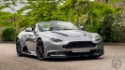
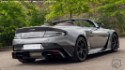
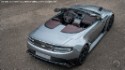
Aston Martin GT12 Roadster

Most Popular from the Aston Martin GT12 Roadster


(1329 views)

(1226 views)

(1160 views)

(1149 views)

(1092 views)

(1067 views)

(1049 views)

(1032 views)

(1008 views)

(986 views)
   AutoSpies.com is the number one ranked website for automotive news, auto shows and car photos.
Page:


(1226 views)

(1160 views)

(1329 views)

(1149 views)

(1092 views)

(1067 views)

(1032 views)

(874 views)

(1049 views)

(847 views)

(868 views)

(892 views)

(889 views)

(826 views)

(861 views)

(859 views)

(1008 views)

(825 views)

(986 views)

from Auto Detailing Services (480)233-1529 http://cardetailingphoenix.com/index.php/2016/08/16/aston-martin-gt12-roadster/

source http://cardetailingphx.tumblr.com/post/149064187306

2017 Audi will countdown traffic lights for you!

Audi Traffic Light information System countdown to 2017

2017 Audi will countdown traffic lights for you

On your mark, get set

Audi is all about keeping its customers connected; hell, it even has a feature called Audi Connect. But in 2017 it will be connecting with a different system from usual: traffic lights.

Audi, along with Traffic Technology Services, will be launching a V2I (vehicle to infrastructure) system that tells a driver when the traffic lights are going to change. The tech, called Traffic Light Information (not a very creative name), will arrive on certain 2017 Q7, A4 and A4 Allroad models this fall.

TLI will be part of Audi connect Prime and enables the vehicles, in select cities, to talk with the traffic light system through the LTE data connection. The gauge cluster, and/or head-up display will tell the driver how many seconds until the light turns green. The system stops counting at the end, probably to deter drivers from jack-rabbiting the light.

The system unfortunately doesn’t tell you when the upcoming light is turning red, or what speed you’d have to hit to make it. That’s something we could really get behind, though we could see how regulators would be against it.

“This feature represents Audi’s first step in vehicle-to-infrastructure integration,” said Pom Malhotra, general manager, Connected Vehicles. “In the future we could envision this technology integrated into vehicle navigation, start/stop functionality and can even be used to help improve traffic flow in municipalities. These improvements could lead to better overall efficiency and shorter commuting times.”

We’re all for that.

We’ll see this system rolling out soon; Audi says it’ll announce which cities the system will work with later this year.

Jake Lingeman Jake Lingeman – Jake Lingeman is Road Test Editor at Autoweek, reviewing cars, reporting on car news, car tech and the world at large. Read more »


from Auto Detailing Services (480)233-1529 http://cardetailingphoenix.com/index.php/2016/08/16/2017-audi-will-countdown-traffic-lights-for-you/

source http://cardetailingphx.tumblr.com/post/149063347941

Mercedes-Maybach 6 for 2018

Silhouette of a Mystery Coupe – Maybach

2018 Maybach

The Vision Mercedes-Maybach 6 concept promises to be one of the highlights on the lawn at Pebble Beach this year. So far we know it’s a coupe and that it’s 6 meters long, or longer than virtually everything. Now, Mercedes has released another teaser, which reveals more of the concept’s rear end along with its gullwing doors.

Bearing paper-thin headlights, a massive waterfall grille, and a long hood, the front end of the car matches the drama of the side profile. It’s also unlike any Mercedes car we’ve seen, although you can argue the grille takes a suggestion or two from the AMG GT R. We initially didn’t know whether or not Mercedes was debuting a concept or production model, but the new teaser makes it clear this is a concept given its “Vision” name. The Mercedes-Maybach 6 will make its official debut at Pebble Beach on August 18.

Maybach Coupe Teaser

If you have trouble remembering the car’s name, note that the “6” references its 6-meter length. The Mercedes-Maybach 6 is expected to be nearly 232 inches long, or even longer than the Mercedes-Maybach S600 sedan, which measures in at 214.6 inches. Also notice the small “Maybach” badge under the three-pointed star.

We wonder if the Maybach coupe will look just as good in the sheetmetal as the Mercedes-Benz Vision Gran Turismo Concept, which debuted two years ago at Pebble. We bet it’ll be a close beauty contest.

Vision-Mercedes-Maybach-6-top-view-gullwings-open

Source: Mercedes-Benz

Vision Mercedes-Maybach 6 Looks Just as Alluring Up Front


from Auto Detailing Services (480)233-1529 http://cardetailingphoenix.com/index.php/2016/08/16/mercedes-maybach-6-for-2018/

source http://cardetailingphx.tumblr.com/post/149062789076